विमर्श Vimarsh · Arthanīti
Two Engines
China rose by making the world’s goods. India rose by serving the world in English. For forty years the two paths looked like a choice. AI ends the choice. A decade-old theory, tested against the data, and what it asks of India on the road to 2047.
Nikhil Sharma · अर्थनीति Arthanīti · 22 October 2026 · 15 min read
I have carried one theory for about ten years. I have argued it at dinner tables, in boardrooms and once, unwisely, with a Chinese supplier. This essay is the first time I have written it down and then tried to break it.
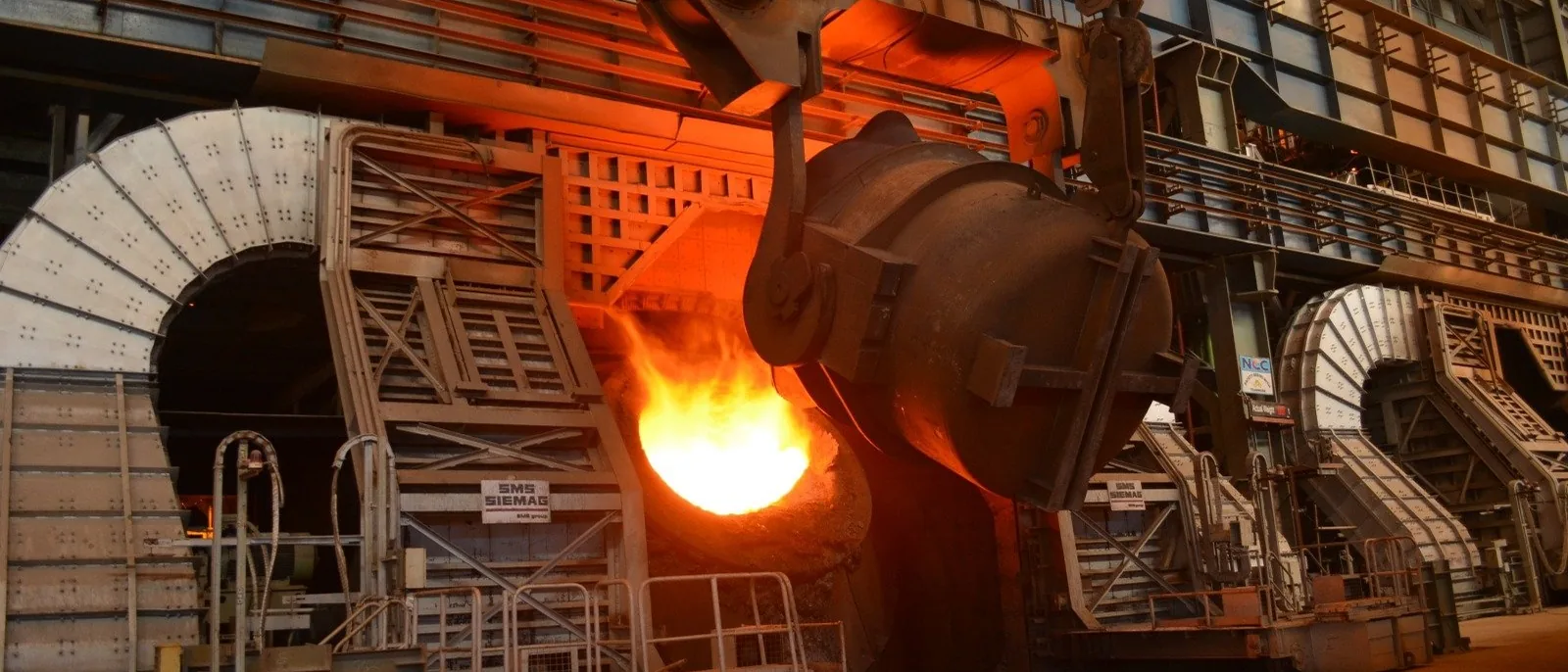
The theory goes like this. China did not have a large population that spoke English or had been schooled in modern science, so it could not sell services to the world. It did the other thing. It put hundreds of millions of people into factories, made everything cheaper than anyone else and climbed back towards the place in the world economy it held three or four hundred years ago.
India took the opposite road. Its middle class was set on English-medium schools. Its graduates answered the world’s phones, wrote its software and ran its back offices. That class came to think of itself as beyond labour and beyond the factory, and for decades India’s manufacturing never took off.
My prediction is that AI changes this. With AI India will get far better at making things, and at some point it will be one of the factories of the world, if not the main one. At the same time its services will keep growing and its AI work will grow fastest of all. Two engines running together, for the first time, and that is how India reaches Viksit Bharat, a developed India, by 2047.
That is the claim. Now the evidence, including the parts that prove me wrong.
China went back
Start with the part of the theory that holds best. For most of recorded history China and India were the two largest economies on earth. On Angus Maddison’s estimates, which the Prime Minister’s own Economic Advisory Council reproduced in July this year, China produced 29.2 per cent of the world’s output in 1600 and 32.9 per cent in 1820. India produced 22.6 per cent in 1600 and 24.4 per cent in 1700.
Then both fell off a cliff. By 1950 China was 4.5 per cent of the world and India 4.2. By 1973 China was 4.6 and India 3.1.
On the IMF’s purchasing-power figures China is now 19.6 per cent of the world economy and India 8.2. China has made one of the great recoveries in history. It is not quite back to 1820, but it is more than half way there. India has barely started.
And China did it in factories. In 1995 China made about 5 per cent of the world’s manufactured value and India about 1.5. By 2023 China made about 32 per cent and India 3.2, according to a NITI Aayog report with Crisil published in August. On one measure of gross output China now makes more than the next nine countries combined.
What I got wrong about China
Here the theory needs correcting, and I would rather do it myself.
China did not go into factories because it lacked English. It went into factories because of what it did after 1978. Xiaodong Zhu’s survey in the Journal of Economic Perspectives finds that most of China’s growth came from rising productivity, which came from reform. Cheremukhin, Golosov, Guriev and Tsyvinski estimate that the reforms added 4.2 percentage points a year to China’s growth compared with the old policies. Joining the WTO in December 2001 cut tariffs and pushed Chinese firms to become more productive, as Brandt and colleagues showed in the American Economic Review.
Money and people mattered as much as policy. Hong Kong supplied about 46 per cent of China’s foreign direct investment between 1983 and 2002 and Taiwan another 7. Today about 301 million rural migrants work away from home in China. And China taught its people to read first: the share of its population that could not read fell from 22.8 per cent in the 1982 census to 6.7 per cent in 2000. The factory worker of the 1990s was literate, and India’s often was not.
The language gap is also smaller than I believed. In the 2025 EF English Proficiency Index India ranks 74th of 123 and China 86th. Only about 129 million Indians, 10.6 per cent, told the 2011 census they speak English at all.
And China is not short of science. In 2020 it awarded more doctorates in science and engineering than the United States. Services are now 57.7 per cent of China’s economy.
So the honest version of my theory is narrower. China had no shortage of science and was not shut out of services by its lack of English. It chose factories, built the conditions for them and was very good at it.
Where the language point still holds
Narrower is not dead. Where English does explain the difference is in what each country sells abroad.
Services were about 28 per cent of India’s exports in 2000 and are nearly half today. In China they were about 13 per cent in 2000 and have stayed close to 10 per cent since 2010, according to a Federal Reserve note published in April. India’s services exports in the year to March 2026 were 421.3 billion dollars, almost exactly the size of its goods exports. China, which makes ten times as many goods as India, sells comparatively few services abroad.
There is good evidence that English is part of the reason. Gauri Kalyani Shastry found that Indian districts where English was easier to learn, for reasons of linguistic history, drew more IT jobs and saw school enrolment rise faster. India’s IT industry of nearly six million people and its 2,100 global capability centres were built on that layer of English-educated graduates.
The appetite is still growing. English-medium schools now teach 60.7 per cent of children in private schools, up from 51 per cent five years earlier, and private schools now hold about 40 per cent of all Indian students. Parents are paying, in many cases with money they do not have, to put their children on the services road.
What I got wrong about India
The second correction hurts more. India did not leave manufacturing because its middle class learnt English. It never built a manufacturing base to leave.
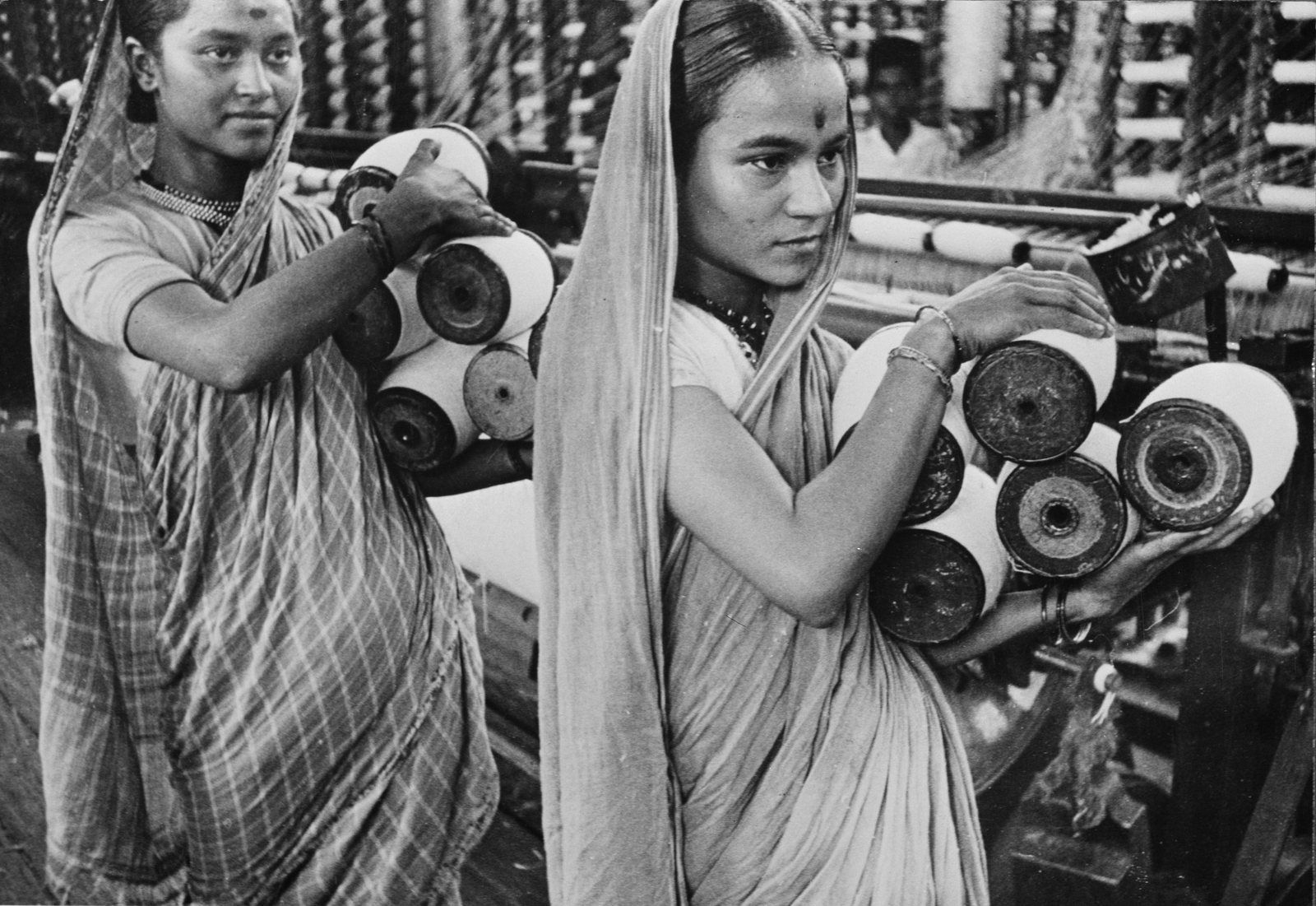
Manufacturing was about 16 per cent of India’s GDP in the 1990s and is about 16 per cent of GVA today on the new national accounts series. The Government itself told Parliament in August that there has been no significant change in its share. Make in India set a target of 25 per cent of GDP and 100 million jobs by 2022. Both were missed. The National Manufacturing Mission now aims for 25 per cent by 2035.
The reasons that economists who have studied it give are not about language. Arvind Panagariya, as Vice Chairman of NITI Aayog, said India historically discouraged large firms from entering labour-intensive industries, through labour laws and by reserving products for small units. The average Indian factory still employs about 150 people. Nearly 60 per cent of Bangladesh’s factories employ 3,000 or more. India exported about 15 billion dollars of clothing in 2023, Bangladesh 38 billion and Vietnam more than 30.
And most Indians are not in services either. In 2025, 43 per cent of Indian workers were in agriculture and 12.1 per cent in manufacturing. Services of every kind, from street trade to software, employed about 32 per cent. The IT industry, the crown of the services story, employs about six million people in a workforce of hundreds of millions.
So here is the theory restated, with the corrections in. India split in two. A thin English-educated layer built a world-class services export industry. The large majority, schooled in Indian languages or barely schooled, stayed on the land, because the factories that should have absorbed them were never allowed to grow big enough. The English-speaking middle class did not abandon manufacturing. It simply had no reason to fight for it, because it had found a better door.
The English-speaking middle class did not abandon manufacturing. It had found a better door.
What AI changes
This is where my original prediction comes back stronger than before.
For forty years the price of entry to modern, well-paid work in India was English and years of experience. AI lowers both at once. That matters most for exactly the people India’s services boom left behind.
It gives the novice the expert’s judgement. The largest field study so far, by Erik Brynjolfsson, Danielle Li and Lindsey Raymond, found that an AI assistant raised the output of support agents by 14 per cent on average and by 34 per cent for the newest and least skilled. Experienced workers gained little. The study was not in a factory, and I will not pretend it was. But the mechanism is the one a factory needs: it turns years of tacit knowledge into advice a new worker can use on day one. Dani Rodrik, who is sceptical of manufacturing-led growth, says the same thing of AI: it makes skills available to people with less training.
It removes English as the gate. Bhashini, the Government’s language platform, now offers 36 languages in text and 23 in voice, with more than 15 million requests a day. A machine manual, a safety rule or a supervisor’s copilot can now speak Marathi, Odia or Bhojpuri. The language that divided India’s workforce in two no longer has to divide the factory floor. This is the deepest reversal of my old theory: the advantage that English gave the few, AI can give the many in their own language.
It makes quality measurable. Buyers abroad do not reject Indian factories for being Indian. They reject them for inconsistency. Vision inspection and predictive maintenance turn consistency into a number. Tata Steel’s Kalinganagar plant, India’s first World Economic Forum “lighthouse” factory in 2019, saves about ₹100 crore a year from analytics in one pellet plant alone. DCM Shriram’s Gujarat site, named a lighthouse in June, raised its operating margin by 11 points and cut power costs by 32 per cent. Bengaluru’s SwitchOn runs AI inspection on more than 170 production lines.
It points the services engine at the factory. Stanford’s AI Index 2026 ranks India first in the world for the share of its workforce with AI skills, at three times the global average. India has about 2,117 global capability centres employing 2.3 million people. The engineers who ran the world’s back offices are the people best placed to build the software brains of Indian factories. Services do not compete with manufacturing in this picture. They become its nervous system.
And the world has opened a window. Buyers want a second source after China. India assembled about 23 per cent of the world’s iPhones in 2025, up from 14 per cent a year earlier, and forecasters expect over a quarter this year. India’s electronics production rose from ₹1.9 lakh crore in FY15 to about ₹13.1 lakh crore in FY26, and electronics exports from about ₹38,000 crore to ₹4.24 lakh crore. Foreign direct investment rose 18 per cent to 58.85 billion dollars last year.
Two engines, already visible
In the year to March 2026 India exported a record 863.1 billion dollars: 441.8 billion of goods and 421.3 billion of services. The two engines are now the same size. But in share of the world they are not. India sells 4.3 per cent of the world’s commercial services and only 1.8 per cent of its goods.
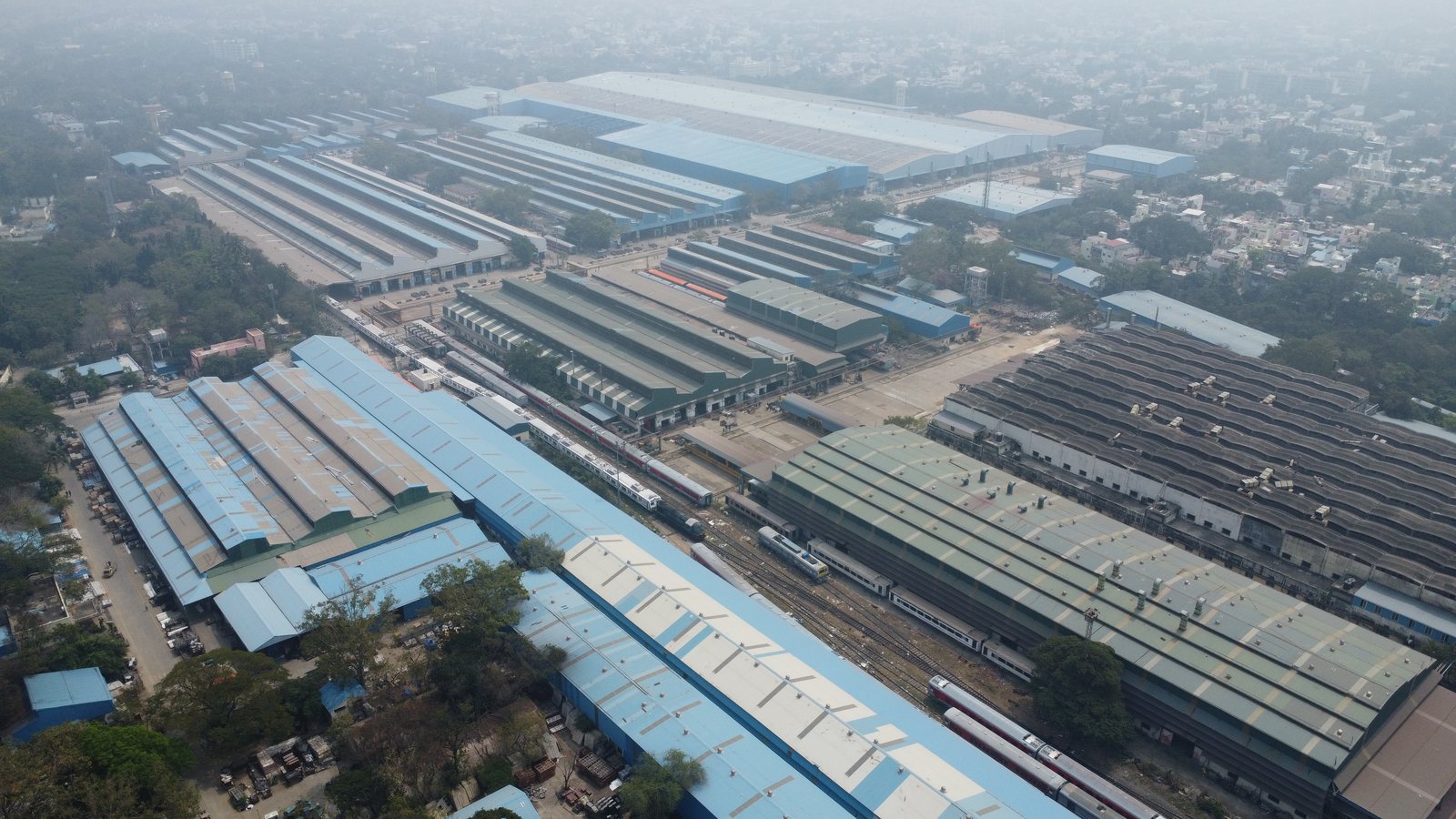
Viksit Bharat needs both to run hard. NITI Aayog’s vision is a 30 trillion dollar economy with income of about 18,000 dollars a head by 2047, which needs growth of 7 to 10 per cent a year for two or three decades. NITI estimates that AI alone could add 500 to 600 billion dollars to GDP by 2035. India’s median age is 28.8, and the share of Indians of working age peaks in the mid-2030s. The demographic window and the AI window are open at the same time. They will not both be open again.
Where this argument is weakest
A white paper that only argues its own side is a brochure. Here is the strongest case against mine.
Robots may take the ladder away. China rose on cheap labour. AI and robots make labour a smaller share of the cost of making things, which weakens exactly the advantage a poorer country has. Krenz, Prettner and Strulik found that more robots per worker in rich countries lead to more production moving home. A World Bank study found that each additional robot per thousand American workers slowed the growth of Mexico’s exports per worker by 6.7 per cent. If factories can be run by machines in Ohio, India’s young workforce matters less.
China is ahead in exactly this race. In 2024 China installed 295,000 industrial robots, more than half the world’s total and about 32 times India’s 9,100. Chinese makers now supply 57 per cent of China’s own robot market. China holds about 45 per cent of the World Economic Forum’s lighthouse factories, and its “AI Plus” plan of August 2025 aims for more than 70 per cent AI adoption in key sectors by 2027. India is not entering an empty field. It is entering China’s.
AI is already slowing the services engine. India’s IT industry earned 315 billion dollars in FY26 but added only about 1.35 lakh net jobs, one of the slowest years in its history. If AI does to back-office work what it can do, the services engine may hire fewer young Indians, not more, while it grows in value.
India keeps announcing and not paying. The Production Linked Incentive schemes have an outlay of ₹1.97 lakh crore. By June 2026 the Government had paid out ₹36,754 crore. Investment and exports have followed in some sectors, but the gap between promise and payment is the gap that foreign investors read.
Half of India’s potential workforce is still outside it. Women’s labour force participation was 40 per cent in 2025. China’s factories were built on young women from the villages. India cannot be a factory of the world with most of its women outside work.
The help from abroad is fickle. In twelve months the American tariff on Indian goods went from 50 per cent to 18 and then to 10, as courts and deals changed the rules. A strategy that rests on another country’s tariff schedule rests on sand.
I take every one of these seriously. My answer is that they describe the old ladder, the one China climbed with cheap hands. They do not describe the new one. India will not become a factory of the world by being cheaper than China in 1995. It can become one by being the place where a literate, AI-equipped, mid-skilled worker in her own language runs a modern line, and where the country’s own engineers write the software that line runs on. That is a different factory, and India is unusually well placed to build it. It also means fewer jobs per factory than China had. More factories have to make up the difference.
Of the two, which is harder
Services will look after themselves. India’s services exports have doubled their share of the world since 2005 and will keep growing, even if AI changes the kind of work inside them.
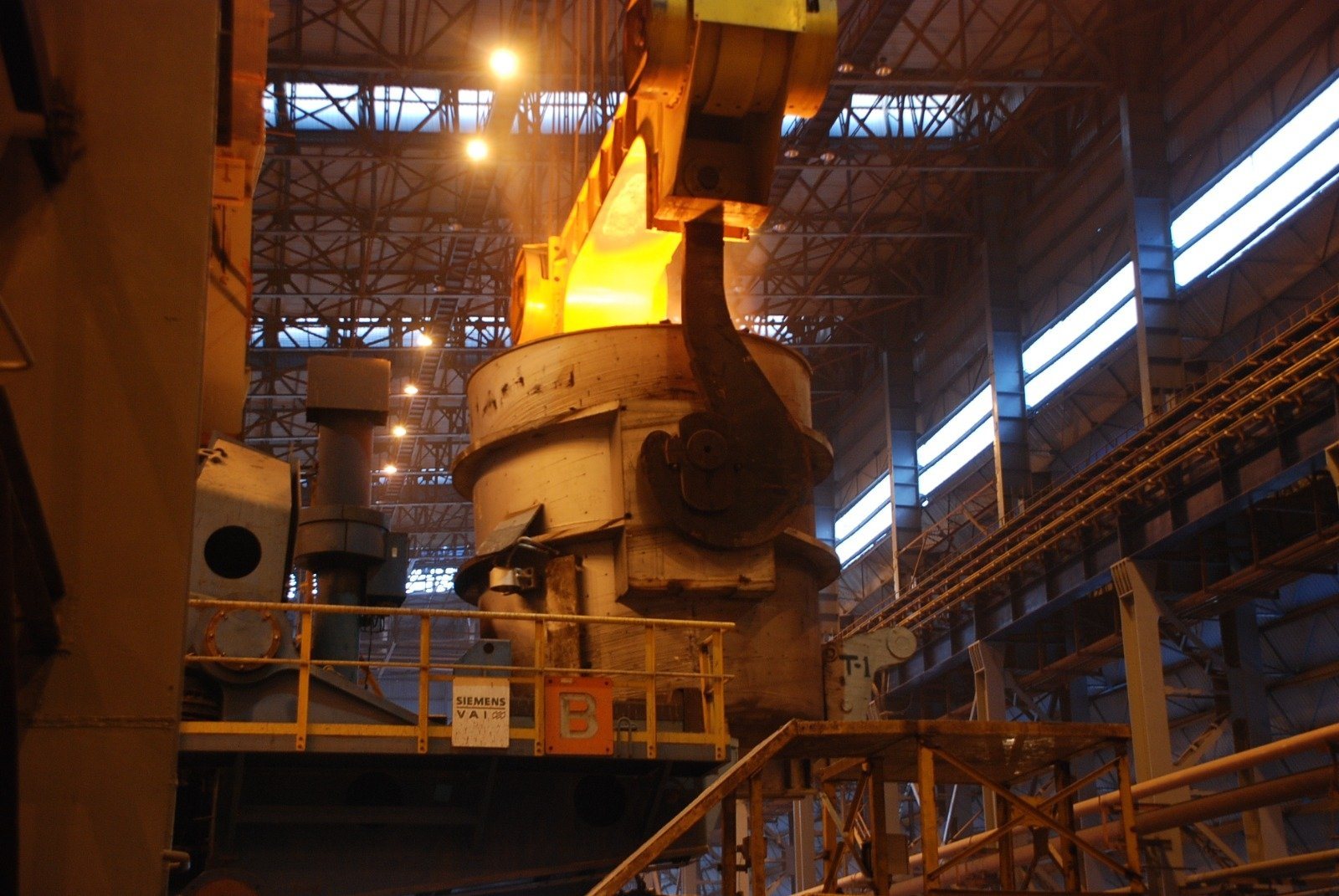
Manufacturing will not look after itself. It needs land, power, logistics, rules that let a factory grow from 150 people to 3,000, and money paid when it was promised. AI makes the worker better. It does not build the industrial park, pass the law or clear the payment. Those are choices for government, and they are the reason I am sending this to the Prime Minister’s Office rather than only publishing it.
The predictions
A theory that cannot be wrong is not worth holding. Here is mine with dates on it.
I will score these on the [wager ledger](/wagers) every year until they fall due. If India misses the first three by 2030, I was early. If it misses the fourth by 2035, I was wrong, and the factory of the world will have stayed in China.
Why I still believe it
Four hundred years ago two countries made half of everything the world produced. One of them has gone most of the way back. The other has spent seventy-nine years discovering that it can serve the world brilliantly and still leave most of its people on the land.
AI is the first technology I have seen that rewards both of India’s strengths at once: the English-speaking engineer who builds the system and the Hindi-, Tamil- or Bengali-speaking worker who can now use it. Two engines, one country. For the first time in my working life the choice between them is false.
Gurugram, 22 October 2026.
Sources, checked 22 October 2026. History: Sanjeev Sanyal, Aakanksha Arora and Payal Sharma, The World in Purchasing Power Parity, EAC-PM Working Paper 54/2026, July 2026 (Maddison shares and IMF April 2026 data). Manufacturing shares: ThePrint on NITI Aayog and Crisil, China’s 32% vs India’s 3.2%, August 2026; Richard Baldwin, Is China still the world’s sole manufacturing superpower?, September 2025. China’s rise: Xiaodong Zhu, Understanding China’s Growth, Journal of Economic Perspectives 2012; Cheremukhin, Golosov, Guriev and Tsyvinski, The Economy of People’s Republic of China from 1953, NBER 2015; Brandt, Van Biesebroeck, Wang and Zhang, WTO Accession and Performance of Chinese Manufacturing Firms, American Economic Review 2019; Fung, Iizaka and Siu, Hong Kong and Taiwan FDI in China, HKCER 2005; National Bureau of Statistics of China, 2025 Statistical Communiqué, 28 February 2026, and Statistical Yearbook 2011, Table 3-5. English and services: EF English Proficiency Index 2025; Gauri Kalyani Shastry, Human Capital Response to Globalization, Journal of Human Resources 2012; Federal Reserve, India and the Global Economy, 8 April 2026; NSF, International Comparisons of S&E Higher Education, 2023; Newslaundry and IndiaSpend on UDISE+, Why 4 in 10 Indian children go to private schools, 17 August 2026. India’s economy: Sharmila Kantha, A net assessment of India’s manufacturing sector, Ideas for India, 2026; IANS, Manufacturing GVA grows at 10.88%, 12 August 2026; PIB, PLFS 2025, 27 March 2026; BOOM, Arvind Panagariya on labour-intensive manufacturing, 2017; Wall Street Journal via To Vima, To challenge China, India needs to get out of the way of its factory owners, December 2024; R. Nagaraj, Make in India: why didn’t the lion roar. Trade and investment: PIB, India’s exports scale record US$ 863.1 billion, 28 July 2026, and services exports US$ 421.3 billion, 24 July 2026; IANS, Economic Survey on India’s trade shares, 29 January 2026; Angel One on DPIIT, PLI incentives total ₹36,754 crore, September 2026; KNN, electronics exports reach ₹4.24 lakh crore, 14 August 2026; National Herald, India’s share in global iPhone assembly, 15 May 2026; India Briefing, FDI inflows FY2025-26, 4 June 2026, and the US-India interim agreement; The Week, US tariffs under Section 301, 24 July 2026. AI and factories: Brynjolfsson, Li and Raymond, Generative AI at Work, Quarterly Journal of Economics 2025; Dani Rodrik, The end of the manufacturing escalator, VoxDev, May 2026; All India Radio, Bhashini, 12 March 2026; Tata, Tata Steel Kalinganagar, India’s industrial lighthouse, 2019; World Economic Forum, Global Lighthouse Network, January 2026 and June 2026; Inc42, SwitchOn, 16 July 2026; OpenSourceForU on the Stanford AI Index 2026; VisionIAS on NASSCOM-Zinnov, GCCs cross 2,100, May 2026; ETV Bharat on NASSCOM FY26; MediaNama, NITI Aayog on AI for Viksit Bharat, September 2025. The counter-case: IFR, global robot demand doubles in ten years and India release, 25 September 2025; China Daily, China’s lighthouse count, January 2026; China Briefing, China’s AI Plus manufacturing roadmap; Krenz, Prettner and Strulik, robots and reshoring, GLO 2020; Artuc, Christiaensen and Winkler, Does automation in rich countries hurt developing ones?, World Bank 2019. Viksit Bharat: IndBiz on NITI Aayog’s Vision for Viksit Bharat @2047; NCAER, Limits of India’s demographic sweet spot, November 2025.