विमर्श Vimarsh · Arthanīti
Mend Before You Build
On 20 October 2026 a Maersk container ship went up on a shiplift near Chennai: the line’s first drydocking in India. India builds under one per cent of the world’s ships and pays foreign lines about 75 billion dollars a year in freight. The road to a developed India by 2047 runs through the repair yard first.
Nikhil Sharma · अर्थनीति Arthanīti · 22 October 2026 · 10 min read
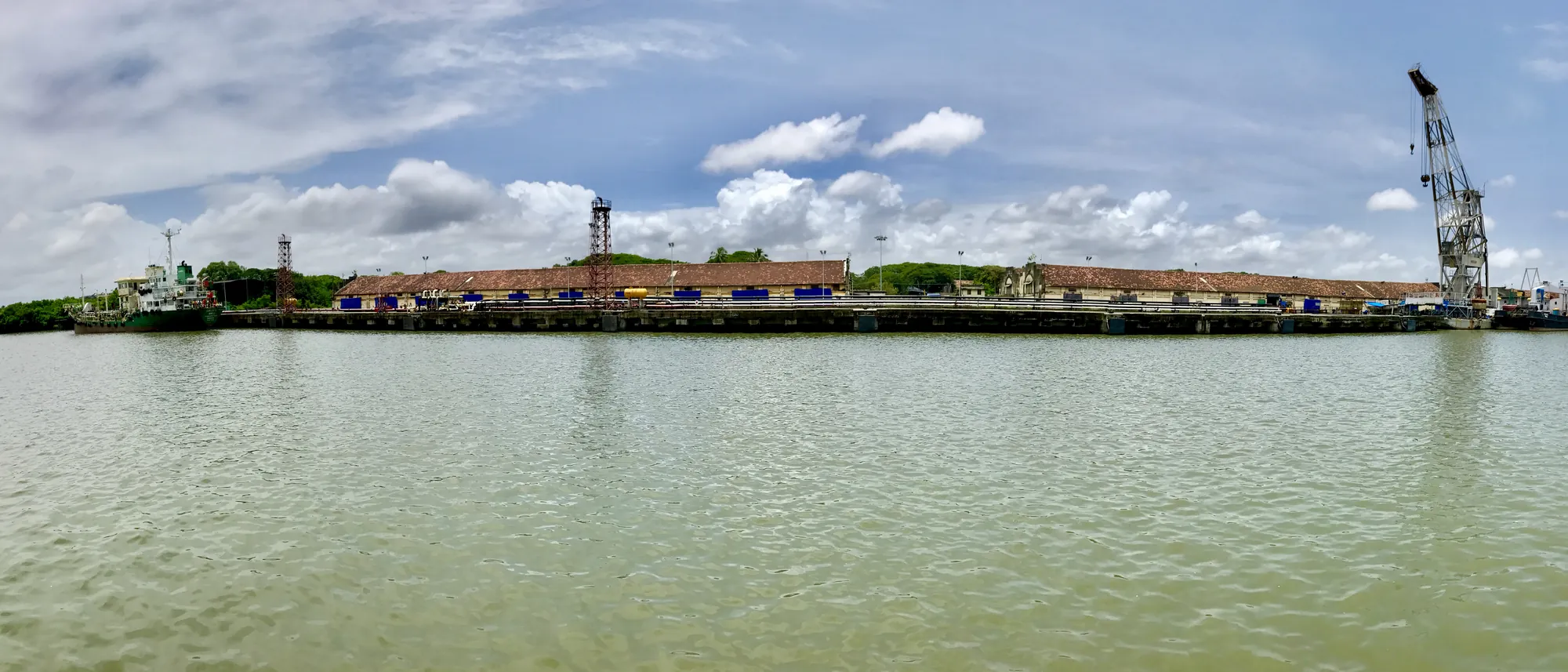
Written on 22 October 2026, two days after a ship went up on a lift.
On 20 October the Maersk Chattogram, a Singapore-flagged container ship, was due at Larsen & Toubro’s Kattupalli yard north of Chennai to be lifted out of the water on the largest shiplift in India. Her hull and engines were to be inspected and overhauled. It was the first time A.P. Moller-Maersk had sent a ship to India for drydocking. Maersk’s head of fleet operations for the East, Dinesh Kumar Balraj, said the line was aligning its global technical requirements with India’s yards and suppliers.
That sentence is the story. Not the ship. The requirements.
Maersk repairs somewhere between sixty and ninety ships a year, and until this month it did them in China, Turkey and Bahrain. One ship out of ninety is not a market. It is an audition.
The diagnosis
India wants to be a shipbuilder by 2047 and has decided to get there by subsidising the building. The faster road is the one that opened at Kattupalli this week: repair the world’s ships first. Repair pays in weeks rather than years. It is the only part of the business where a foreign owner walks into an Indian yard with his own specification, his own superintendent and his own deadline. A yard that passes that test thirty times will build to it. A yard that has only built for its own navy and its own government has never been tested at all.
One ship out of ninety is not a market. It is an audition.
Under one per cent
Start with the numbers, because they are worse than most people assume.
China, South Korea and Japan build about 98.5 per cent of the world’s ships. In 2024 the split was roughly 53 per cent China, 28 per cent Korea and 12 per cent Japan. India has under one per cent of world shipbuilding capacity: about 0.072 million gross tonnes a year, against 20 million in Korea and 9 million in Japan. The Ministry of Ports, Shipping and Waterways ranks India twenty-second.
Only 7 per cent of commercial ships owned by Indians were built in India. Between 90 and 95 per cent of India’s export and import cargo moves on ships owned by foreigners.
At Bhavnagar in September 2025 the Prime Minister put a price on it. India pays foreign shipping companies about 75 billion dollars a year in freight, roughly six lakh crore rupees, which he said is almost equal to the defence budget. More than fifty years ago, he said, Indian ships carried over 40 per cent of India’s trade. The share later fell to about 5 per cent.
Hold those figures together. A country that spends a defence budget every year renting other people’s ships is not sovereign in its trade, however large its ports become.
Repair, the smaller door
Ship repair is a smaller business than shipbuilding and the estimates of its size disagree. CRISIL put the global market at about 12 billion dollars in February 2025. A 2026 industry estimate quoted by Business Today puts it at 32 to 41 billion. Both agree that India’s share is tiny: under one per cent according to CRISIL, under two according to Business Today.
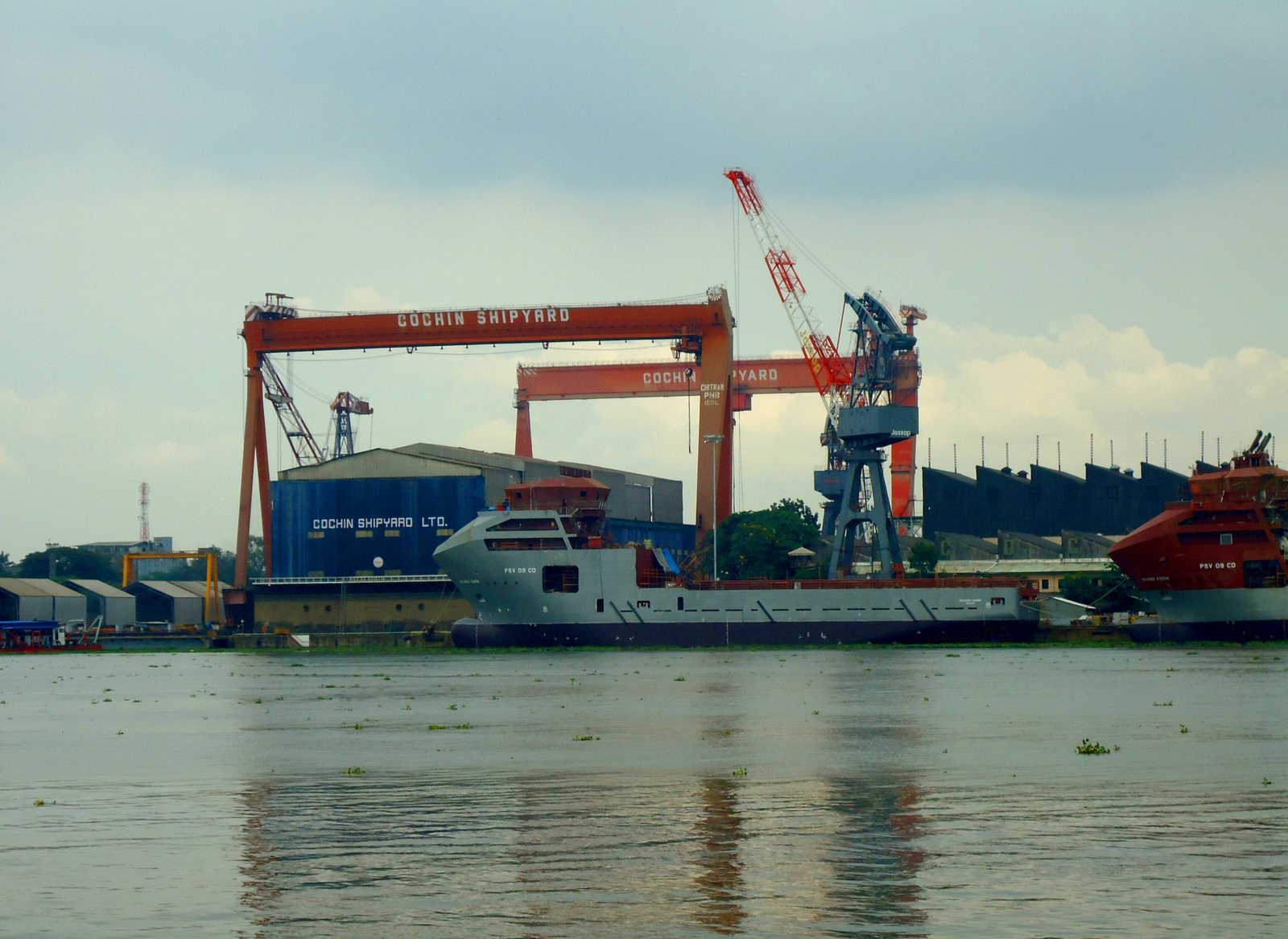
CRISIL also gives the two numbers that explain why. Repair in an Indian yard costs on average 1.4 times what it costs in Dubai or Southeast Asia. It takes 1.4 to 1.6 times as long as the global average. An owner choosing a yard cares about cost and time and almost nothing else. India was dearer and slower, so the ships went elsewhere.
Why start here and not with building? Rear Admiral Shekhar Mittal (retired) gave Business Today the reason. Maintenance, repair and overhaul turns cash faster: weeks in the dock against three to five years on a building berth. A yard that repairs is paid this quarter. A yard that only builds is financing a hull through two budget cycles and a change of minister.
There is a second reason and I think it matters more. A newbuild order from a government buyer comes with a specification the yard can negotiate. A repair job for Maersk comes with Maersk’s specification, Maersk’s class surveyor and a ship that has to sail on a date already promised to customers on three continents. That is the grading system a yard has to learn before it can sell a hull to anyone abroad.
What changed in three years
January 2024. The Prime Minister opened Cochin Shipyard’s International Ship Repair Facility on Willingdon Island in Kochi. It cost ₹970 crore and has a 6,000-tonne shiplift with six dry repair berths, for ships up to 130 metres by 26 metres.
February 2025. Maersk and Cochin Shipyard signed a memorandum to explore repair, maintenance and building: afloat repairs on ships up to 7,000 TEU (twenty-foot containers) and drydocking up to 4,000 TEU. Maersk’s fleet chief Leonardo Sonzio said he hoped “a sizeable portion” of the line’s dockings could come to India. In the same weeks CMA CGM promised to send a study team and MSC’s chief executive met the Commerce Minister.
24 September 2025. The Union Cabinet approved a ₹69,725 crore package. ₹24,736 crore goes to the Shipbuilding Financial Assistance Scheme, extended to March 2036. ₹25,000 crore forms a Maritime Development Fund, of which ₹20,000 crore is an investment fund with 49 per cent government participation and ₹5,000 crore brings down the cost of debt. ₹19,989 crore goes to a Shipbuilding Development Scheme for mega clusters, an India Ship Technology Centre and insurance cover. A National Shipbuilding Mission sits over all of it. The stated targets are 4.5 million gross tonnes of capacity a year, about 30 lakh jobs and around ₹4.5 lakh crore of investment.
October 2025. At India Maritime Week in Mumbai over 600 memoranda worth more than ₹12 lakh crore were signed and the Maersk and L&T partnership was announced. Public buyers counted 437 vessels on order or planned, including a 51-ship Bharat Container Shipping Line.
2026. Gujarat published a Shipbuilding and Repair Policy aimed at more than ₹27,000 crore of investment. The first greenfield cluster is being planned in Tamil Nadu around V.O. Chidambaranar Port. L&T announced a ₹1,000 crore expansion at Kattupalli, where it has already repaired the American naval ship USNS Salvor and two British ships, RFA Argus and RFA Lyme Bay. Mazagon Dock was cleared to buy a controlling stake in Colombo Dockyard. Then on 20 October the first Maersk ship went up on the lift.
That is real movement. It is also mostly announcements, memoranda and funds. One ship has been drydocked.
From the yard to 2047
Why should a reader who has never seen a dry dock care? Because of the arithmetic of Viksit Bharat, a Developed India.
NITI Aayog’s approach paper sets the target at a 30 trillion dollar economy by 2047, with income of about 18,000 dollars a head: roughly nine times the economy of 2024 and eight times its income per person. The maritime ministry’s Maritime Amrit Kaal Vision 2047 expects about ₹80 lakh crore of investment and 1.5 crore jobs. India’s export and import cargo is projected to grow from about 1.2 billion tonnes now to nearly 5.7 billion tonnes in 2047. The Prime Minister has asked for India’s share of global maritime trade to triple by then.
Run those together and the shipping question nearly answers itself. A country moving nearly five times today’s cargo on other people’s ships would be paying a freight bill far larger than today’s defence budget, in dollars, to companies whose home governments can decide when their ships sail.
I say nearly, because the United States is the obvious objection. It is the richest economy in the world and moves almost all of its trade on ships it neither owns nor builds. A developed country can rent its ships. But America does it with the world’s reserve currency and the world’s largest navy behind it. India has neither, so it cannot rent its ships on America’s terms.
The government’s own multipliers explain why it wants yards as well as ships. Every job in a shipyard is estimated to create 6.4 jobs elsewhere, in steel, engines, paint, wiring, electronics and services. A rupee of shipyard investment is estimated to bring 1.82 rupees of wider investment. Those are the government’s numbers and I would treat them as optimistic. The direction is still right. A shipyard is a very large assembly plant that buys from hundreds of smaller ones, which is exactly the kind of manufacturing India has struggled to build.
Repair is the first step on that road. The 2047 goal is to be among the top five shipbuilders. The 2030 goal is the top ten. Neither is reachable by yards that have never had a foreign owner’s superintendent standing on the dock.
Where this argument is weakest
The cost gap may be structural. India’s naval yards price surface warships 30 to 40 per cent below European yards. Against East Asia there is no such advantage. India’s labour is cheaper than China’s, Korea’s or Japan’s but its steel, its money and its insurance cost more. Repair is labour-heavy so it may close the gap first. A hull is mostly steel and financing so that gap may never close.
India has lost lines before. Cochin Shipyard’s aircraft-carrier line has stood idle since the first carrier was handed over in 2022. Mazagon Dock’s submarine line withered over two decades without follow-on orders. Captain K.K. Agnihotri (retired) warns that idle lines are not easily restarted. Skills disperse and suppliers leave. A policy that runs in bursts produces bursts.
The last scheme barely paid. The Shipbuilding Financial Assistance Policy of 2016 drew 313 vessel orders from 39 yards worth about ₹10,500 crore and paid out about ₹337 crore of assistance, on CRISIL’s figures. Either the yards did not need the money or they could not claim it. I do not know which, and the new package is that scheme made larger.
Repair can be a ceiling as well as a door. Bahrain, Dubai and Turkey repair a great many ships and build comparatively few big merchant ships. Being good at mending does not oblige a country to build, and the margins in repair are thin.
One ship is not a trend. The Maersk Chattogram is one docking on a line that does sixty to ninety a year. If the next five go back to Bahrain on price, this essay will have been written about an exception.
I still think the order is right. The yards that become builders are the ones that first learn to satisfy owners they do not control. Repair is the cheapest way to learn that, and the only way that pays while you learn.
For anyone building something in India
The same order works for a company. Take the job where the customer writes the specification before the job where you write it. Get paid in weeks before you take on a contract that pays in years. Treat the first foreign inspector who rejects your work as the specification finally arriving. Every line of the shipbuilding package will be judged by whether it pushed India’s yards into that kind of work or protected them from it.
The wager
Due 31 March 2030. India will become a ship-repair destination before it becomes a shipbuilding nation. By the end of March 2030 Indian yards will be drydocking ships from at least three of the world’s five largest container lines, while India’s share of world shipbuilding output stays under 2 per cent. If India’s share of building passes 2 per cent first, the building subsidy was the right lever and I was wrong about the order.
Five markers, all public. One: at least three of the five largest container lines by capacity in Alphaliner’s 2029 ranking have publicly confirmed drydocking ships in an Indian yard. Two: UNCTAD’s Review of Maritime Transport or Clarksons shows India under 2 per cent of world ship deliveries by gross tonnage in 2029. Three: the Shipbuilding Financial Assistance Scheme has paid out more than ₹5,000 crore by 31 March 2030, in the ministry’s annual report or a reply in Parliament. Four: Indian-flagged ships carry more than 10 per cent of India’s seaborne trade, against about 5 per cent now. Five: a published CRISIL or ICRA comparison shows Indian repair costs at or below 1.2 times Dubai or Southeast Asia, against 1.4 times in 2025.
The one I will watch hardest is the third. Announcements are free. Disbursements are not. The bet is on the [wager ledger](/wagers).
Gurugram, 22 October 2026.
Sources, checked 22 October 2026. Firstpost, Maersk Sends Its First Ship To India For Drydocking, 21 October 2026. Marine Insight, Maersk lines up first Indian drydocking at L&T’s Kattupalli shipyard, 19 October 2026. The Maritime Executive, Maersk plans repairs at India’s Cochin Shipyard, 17 February 2025, and CMA CGM and MSC beat a path to India, 18 February 2025. India Seatrade News, Maersk to repair sizeable number of ships in India, 1 March 2025. PMIndia, the ₹69,725 crore package, 24 September 2025. Business Today, India wants to become a shipbuilding power, 28 September 2026. CRISIL, Forging New Horizons, February 2025, pp. 7, 8, 10 and 13. Hellenic Shipping News from Business Standard, where India stands in shipbuilding, 18 September 2024. India Shipping News, India pays around $75 billion to foreign shipping companies, 23 September 2025. The Week, India Maritime Week 2025 MoUs, 30 October 2025, and the $26 billion pledge, 29 October 2025. Ship & Offshore, Cochin Shipyard’s repair hub. India Seatrade News, ₹80 lakh crore under Vision 2047, 18 September 2025. Greater Kashmir on NITI Aayog’s Vision for Viksit Bharat @ 2047, 29 July 2024.