पाठशाला Pathshala · मन Man, The founder · Lesson 08 · Start
Health: sleep, exercise and running the ten-year race
A company worth building takes the better part of a decade. Set the floors for sleep, movement and food now, so judgement is still sharp in the fundraise that decides the company.
Pathshala, The Founder Library · 11 October 2026 · 7 min read

The company that matters will take most of a decade to build. The founder’s body is the one piece of equipment that cannot be replaced in that time, and the one founders maintain least. This lesson sets three floors, shows what breaking them costs in arithmetic and gives a ten-minute weekly check.
It is not a wellness programme and it contains no promises. It is about one thing: keeping the founder’s judgement intact through the weeks when it is needed most, which are usually the weeks when founders sleep least. Nothing here replaces a doctor, and anyone with a health condition should take their plan from theirs.
Judgement is the asset, and sleep maintains it
An early company runs on a small number of decisions made by a small number of people, and the founder makes most of the expensive ones. Which investor to take, which hire to make, which customer to drop, whether to cut price. The quality of those decisions depends on a brain that is, among other things, rested. That is not a figure of speech.
Two studies are worth knowing by heart. In 2000 Williamson and Feyer compared sleep deprivation with alcohol and found that after seventeen to nineteen hours without sleep, performance on some tests was equivalent to or worse than at a blood alcohol concentration of 0.05 per cent, with response speeds up to half as fast; longer periods awake reached the equivalent of 0.1 per cent. A founder who wakes at six and is still answering investor email at midnight has been awake eighteen hours. Then in 2003 Van Dongen and colleagues restricted sleep for fourteen days and found that six hours a night or less produced cognitive deficits comparable to up to two nights of total sleep deprivation, building up night by night. The finding that should worry founders most is the last one: the subjects’ own sleepiness ratings barely rose after the first few days. They were largely unaware of how impaired they had become.
That is the trap of a fundraise or a launch. The founder feels roughly fine on six hours, and the feeling is precisely the instrument that the research says stops working. The CDC puts the need for adults at seven or more hours a night. Most people know their own figure: it is what they sleep in the second week of a holiday.
Three floors, not goals
A goal is something to reach for. A floor is something not to go below, and it is the right shape for a founder’s health because the job will always pull toward less. Three floors cover most of what matters.
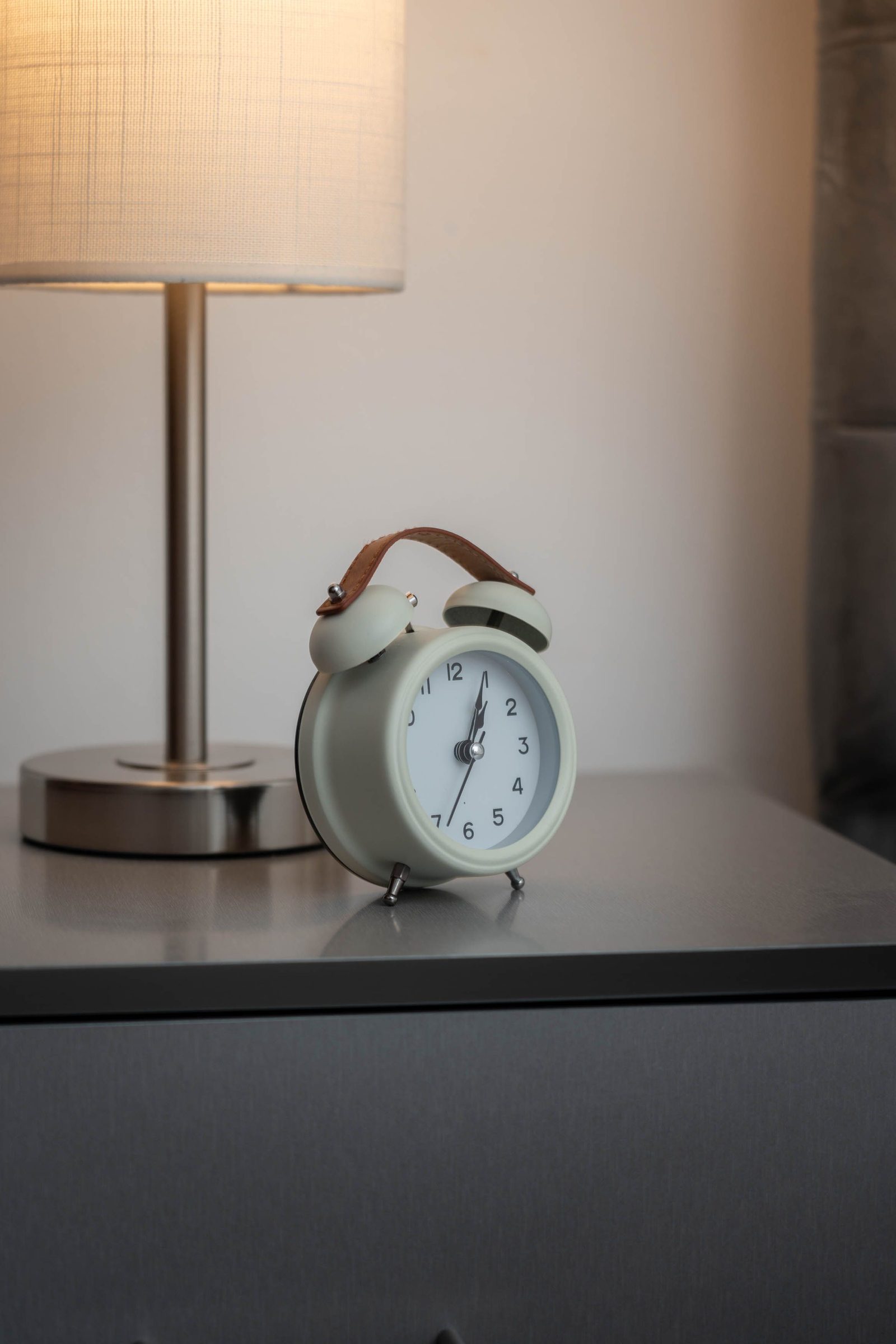
The sleep floor. Pick a number of hours you will not go below on more than one night a week, and a time by which the laptop is closed. Seven is a sensible floor for most adults. Protect the time before the floor rather than the hours themselves: a founder who stops work at eleven usually sleeps; a founder who stops when the inbox is empty does not.
The movement floor. The WHO’s physical activity guidance sets a minimum of at least 150 minutes of moderate-intensity activity a week for adults, and notes that 31 per cent of the world’s adults do not meet it. Thirty minutes of brisk walking on five days clears it. Founders in Indian cities often find the walk is the only form that survives: before the heat in Delhi NCR in May, around a park in Bengaluru before the first call, on the terrace if the traffic makes anything else impossible. Calls taken on foot count. Muscle-strengthening work on top is worth doing; the floor is the 150 minutes.
The food floor. Three meals at roughly regular times, one of them eaten away from a screen. No figure is needed. The failure mode in a startup is not a bad diet so much as no diet: lunch skipped until four, dinner ordered at eleven, caffeine standing in for both. The floor is regularity, because regularity is what survives a busy week.
Alcohol belongs in this list as a number, not a rule. Count drinks a week and write the number down once a month. The point is to notice drift, which in a hard quarter is quiet and steady.
What a sprint actually costs
Founders bargain with themselves: six hours for ten weeks, then catch up. The figure below makes the bargain visible. Set the hours you need, the hours you are getting on weeknights and weekends, and the length of the sprint. The red line is every hour short. The dashed line credits weekend lie-ins in full, which is the most generous reading available. The green line marks two whole nights of sleep, for scale: a sprint that crosses it has given up more sleep than two all-nighters would.
The default is not extreme. Six hours on weeknights against a need of seven and a half is seven and a half hours short a week, and seventy-five hours over a ten-week raise: the equivalent of ten whole nights. Weekend lie-ins narrow it on paper. Whether they repay it in practice is not something the arithmetic can tell you, and the safe assumption for a founder whose decisions matter is that they do not repay all of it. Move the weeknight slider to seven and watch what one more hour a night buys.
The feeling of being fine on six hours is the instrument the research says stops working first.
Running a fundraise without breaking
The weeks of a raise are the hardest test of the floors, and the [lesson on running the process in six weeks](/library/fundraising-process-six-weeks-not-six-months) exists partly for this reason: a raise that is compressed and planned is far easier on the founder than one that drifts for six months. A few rules make the difference. Decide the sprint’s length before it starts and write the end date in the calendar. A sprint without an end is not a sprint; it is a new normal. Hold the sleep floor and give up something else. Social plans, the side project and the non-urgent hiring can wait ten weeks. Sleep cannot, because the pitches and term sheets are exactly the decisions that need it. Schedule the hard meetings for the morning. The partner meeting and the negotiation call go where judgement is freshest; email goes to the end of the day. Travel carefully. An early flight from Bengaluru to Mumbai after a midnight finish is the eighteen-hour day in the Williamson study, followed by the meeting that matters most. Fly the evening before. Move every day of the sprint, even for twenty minutes, because it is the habit most likely to vanish and the hardest to restart.
The annual check-up, and when not to wait for it
Book a full health check once a year on a fixed date, the way the company files its annual return: blood pressure, blood sugar, cholesterol and whatever the doctor advises for your age and family history. Founders who left a job lost the employer’s annual check with it, and nobody books the replacement unless it is on the calendar. Put it in the same month every year.
Some things should not wait for the annual date. Tiredness that persists after a week of proper sleep, breathlessness or chest discomfort, a cough that will not clear, sleep that will not come even when there is time for it: these go to a doctor that week. Low mood, loss of interest and withdrawal that last a fortnight are covered in the [lesson on the founder’s mental health](/library/founders-mental-health-risk-not-in-the-deck), and the same rule applies. A doctor is the right person to talk to, and booking the appointment is the founder’s job, not something to delegate to the next quiet month.
A Sunday check, in ten minutes
Every Sunday evening, before planning the week, write four numbers in the same place: average hours slept on weeknights, minutes moved, meals eaten away from a screen, drinks taken. Compare each with its floor. If one floor broke, find the cause in the calendar and move one thing in the coming week to fix it, usually a late meeting or a morning that started with email. If two floors broke two weeks running, the week ahead gets lighter, not heavier, and someone you trust hears about it. At the start of every sprint, set its end date and its floors in writing. At the end of it, take two days off before the next thing begins. The race is ten years long. It is won by the founder who is still sharp in year seven.
Nothing here is medical advice. Take your own plan from your doctor, especially if you have a health condition. Sources were checked in October 2026.
Sources
- Williamson and Feyer, Moderate sleep deprivation produces impairments in cognitive and motor performance equivalent to legally prescribed levels of alcohol intoxication, Occupational and Environmental Medicine, 2000 — 17 to 19 hours awake: performance equal to or worse than BAC 0.05 per cent on some tests.
- Van Dongen, Maislin, Mullington and Dinges, The Cumulative Cost of Additional Wakefulness, Sleep, 2003 — Six hours or less for 14 days: deficits comparable to up to two nights of total deprivation; subjects largely unaware.
- Centers for Disease Control and Prevention, About Sleep — Adults 18 to 60: seven or more hours a night.
- World Health Organization, Physical activity, fact sheet — At least 150 minutes of moderate-intensity activity a week; 31 per cent of adults inactive.