पाठशाला Pathshala · विचार Vichār, The idea · Lesson 10 · Start
Walk the idea maze before you walk into it
Every idea is a maze of choices other teams have already walked. Map the branches, who took each one and where they died, in a weekend, and enter with a map rather than a hunch.
Pathshala, The Founder Library · 11 October 2026 · 7 min read

A founder who says nobody has done this before has usually not looked. Almost every idea worth building has been attempted, in some form, by a team that took a particular turn and met a particular wall. The walls are on record. Reading them first is the cheapest research in company building.
This lesson gives that research a shape, the idea maze, and a weekend method to draw one. The checklist in the middle is the method. The worked example is a maze Indian founders have walked at great expense: getting groceries to a kitchen door.
What the idea maze is
The term is Balaji Srinivasan’s and the essay that spread it is Chris Dixon’s The idea maze, from August 2013. Dixon quotes Srinivasan: a good founder can anticipate which turns lead to treasure and which lead to certain death. A good idea, in this view, is not a single insight. It is a multi-year plan that anticipates how the world, the competitors and the technology will respond at each turn.
Dixon names four sources for the map. History: study what previous attempts did right and wrong. Analogy: learn from businesses with a similar structure; a marketplace founder should understand how eBay began. Theory: the generalisable lessons of decades of startup data. Direct experience: working inside the market until its turns become familiar. Matt Rickard, writing on the same idea in 2022, adds the corollary that matters most: circumstances change, and a path that failed can later become viable. The maze is not fixed. The map has dates.
Drawn on paper the maze is a tree. The root is the job the customer needs done. Each level is a decision: who the customer is, how the business makes money, how supply is arranged, how the product reaches the customer. Each leaf is a company that took that path, with its founding year, its funding and its fate.
A maze already walked: groceries to the door
The job is old and simple: get a household’s groceries into its kitchen today. Three branches of the maze have been walked hard, in the United States and in India.
Branch one: own the warehouse, own the vans, deliver a big scheduled basket. In the United States this is the branch of Webvan, which raised close to $800 million, signed a $1 billion contract with Bechtel to build its warehouses at about $30 million each, and filed for bankruptcy in 2001. Its own investor, Sequoia’s Michael Moritz, later said the company expanded into new territory before it had shown success in the first market. The cause was capital spent ahead of demand that had not yet formed. Pets.com failed on a neighbouring branch of the same maze. The same job later supported large companies on adjacent branches. Chewy, selling pet supplies online, sold for $3.35 billion in 2017, and Instacart, delivering groceries, carried a valuation Rickard put at $24 billion when he wrote in 2022.
Branch two: no inventory, pick from local shops, deliver fast with your own riders. In India this was the 2015 wave. PepperTap had raised close to $50 million, including a $36 million round in September 2015, and planned to reach 75 cities by March 2016. In February 2016 it shut operations in six cities to focus on depth over breadth, and by April it had shut down. Its co-founder named three causes, as YourStory reported: expansion faster than operations could follow, customers acquired through discounts, and, the most fatal, cash burned on logistics and operations. On this branch the delivery cost never fell below the margin on a small grocery basket.
Branch three: own inventory again, but in small dark stores minutes from the customer, with a basket built for margin. This is quick commerce, which returned from 2021 onwards to the same job by a different turn. In the quarter to December 2025 Blinkit, with 2,027 dark stores, reported its first adjusted EBITDA profit of ₹4 crore on operating revenue of ₹12,256 crore, the revenue jump driven partly by a shift to an inventory-led model. The margin is wafer thin and the branch is a race between a few of the best-funded companies in the country.
Read the map and three things are visible that no amount of enthusiasm reveals. Branch two is closed unless something about small-basket delivery economics has changed. Branch three is open but costs a fortune to enter. And the unexplored branches, selling to a different customer such as restaurants or kirana stores, or making money a different way, are where a small team with no capital might find a door. That is a strategy. Without the map it would have been a hunch.
How to draw your own maze
Start with the job, written without a product in it. Then branch on the four decisions that most often separate the living from the dead: customer, business model, supply and channel. Most mazes have a dozen to thirty leaves once you start looking. Populate each with real teams, Indian and global, with years attached. The databases, news archives and shutdown round-ups exist; the work is reading them with a pen rather than skimming them for reassurance.
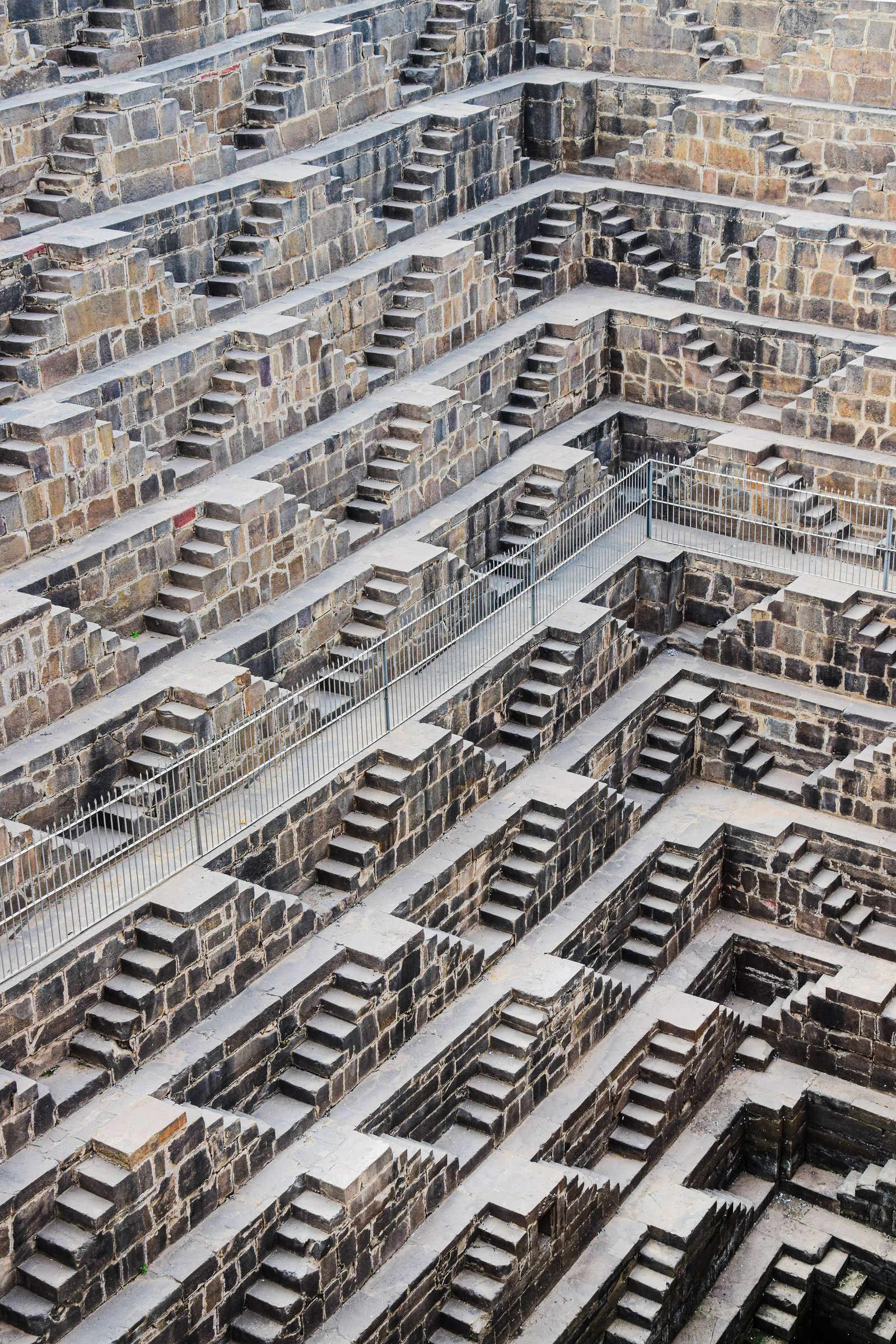
The most valuable line on each dead leaf is the cause of death in one sentence. Not “ran out of money”, which is how every company dies. The cause that made the money run out: customers would not pay enough, supply would not show up, the basket was too small for the delivery, the regulator said no. When three leaves on one branch have the same sentence, the branch is closed, and the only reason to enter it is evidence that the cause has changed.
Indian mazes have one extra source worth using. A company that has stopped trading often still exists on paper, so a dead leaf can look alive from its website. The company’s filing status with the Ministry of Corporate Affairs, its last filed accounts and any notice of striking off tell you whether it is operating, shrinking or gone. Pair that with the founders’ own public posts, which in India often announce a shutdown more candidly than any press release.
Every dead end in the maze has a date and a cause. Read both before you choose a door.
Reading the map: where to enter
Three kinds of branch are worth entering. A closed branch whose cause has changed, with a date and a number to prove it; this is the [why-now](/library/why-now-timing-argument) argument applied to a specific dead end. A branch nobody has walked properly, where the teams that tried it died of executional causes such as a co-founder split or a downturn rather than structural ones. A branch adjacent to a living company, serving the customer the winners ignore or selling to the winners themselves.
One kind of branch is not worth entering on the old terms: the branch where several teams died of the same structural cause and nothing about that cause has moved. That is a [tarpit](/library/tarpit-ideas-why-they-keep-looking-good), and the map is how you see it from outside.
Then write the next two turns. Dixon’s point was that the founder anticipates the maze, not merely its entrance. If your first plan works, what will the incumbent do, and what is your answer? If it does not, which adjacent branch can you reach without starting again? A founder who can answer both has a plan. A founder who cannot has an entrance.
What the maze cannot tell you
The map has blind spots. Quiet failures leave no press, so the dead are always under-counted; assume every branch has more casualties than you found. Private reasons for failure, a fight, an illness, a fraud, can look structural from outside; the calls to former employees are how you tell them apart. And the map shows the past, so a branch that killed everyone in 2016 may be open in 2026 for reasons no post-mortem mentions. That is why the last item on the checklist asks you to name the number that would tell you a closed branch has reopened.
None of these blind spots is a reason to skip the map. They are reasons to hold it loosely and redraw it often.
A quarterly ritual: redraw the maze
Keep the map as a living page. Every quarter, add the teams that entered your maze since the last version, move any that died to a dead end with its cause, and check the number you named for each closed branch. Mark your own path in a different colour, with the turns you actually took. Within a year the page becomes the most honest strategy document the company has: where you are, who else is in the maze, and which doors have opened or closed since you walked in.
Company figures are from the sources below, checked in October 2026. Nothing here is investment advice.
Sources
- Chris Dixon, The idea maze, 4 August 2013
- Matt Rickard, The Idea Maze, June 2022
- TechCrunch, Fearing current investment climate, India’s PepperTap scales back its e-grocer service, 9 February 2016
- YourStory, Promising startups that shut down in 2016 due to being operations-heavy, February 2017
- YourStory, Famous Failures: Webvan, the grocery e-tailer that raised over $800 million, September 2014
- Inc42, Eternal Q3 FY26: Blinkit and Hyperpure achieve adjusted EBITDA profitability, January 2026