पाठशाला Pathshala · विचार Vichār, The idea · Lesson 30 · Scale
The next decade of India: where the big problems sit
Build a personal list of the structural Indian problems large enough to carry a company into the 2030s, each with a public number, a buyer who pays today and a wedge.
Pathshala, The Founder Library · 11 October 2026 · 6 min read
The largest Indian companies of the 2030s will be built on problems that already have a number in a government survey. That is not a forecast. It is what a structural problem is: something large and slow enough to measure, and still unsolved.
This lesson closes the track by widening the lens. It defines what makes a problem structural, sets out six Indian problems with their public numbers, shows how to turn a statistic into a company, and ends with a checklist that builds a personal list. The list matters more than the six; the six are examples of the kind of thing to put on it.
What makes a problem structural
The earlier lesson on [problems worth a decade](/library/problems-worth-a-decade) asked whether a single problem will last ten years. A structural problem passes that test by construction. It rests on demography, geography or arithmetic rather than on a product gap or a rule. It outlasts any one government and any one technology. It is tracked by a public number that a statistics office or a regulator publishes on a schedule. And it is large enough that a company solving a small slice of it can still reach hundreds of crores of revenue.
Plenty of large opportunities fail the test. A trend in consumer taste can be enormous and still reverse in three years. A gap created by a regulation can close with the next notification, as the [regulatory arbitrage lesson](/library/regulatory-arbitrage-ideas-expiry-date) shows. A market created by a subsidy lasts as long as the subsidy. None of these is a bad business, but none of them is a decade-long foundation. A structural problem is the opposite: the number moves in the same direction for years whatever happens in a budget speech.
The public number is the useful part. It tells a founder how big the problem is, which way it is moving and how fast, without an analyst’s estimate in between. It also gives an investor something to check, which is half of the [why-now argument](/library/why-now-timing-argument). Every problem below is listed with its number, its source and the date. The list is not complete and is not a ranking; health, education, housing and the cities themselves each have numbers of their own and belong on many founders’ lists.
Demography and work: an ageing country, and women’s jobs
Ageing. India is young now and will not stay so. The India Ageing Report 2023 from the International Institute for Population Sciences and UNFPA put the share of Indians aged 60 and over at 10.5 per cent in 2022, about 149 million people, rising to 20.8 per cent by 2050, about 347 million. The companies this can carry are in home care, chronic disease management, assisted living, financial products for retirement income, and the services a working child buys from far away.
Women’s work. The Periodic Labour Force Survey shows female labour force participation, for women aged 15 and over by usual status, rising from 23.3 per cent in 2017–18 to 41.7 per cent in 2023–24, against 78.8 per cent for men. The gap with men is still wide, and the constraints a company can address are practical: childcare, safe transport, skills for the jobs that are growing, and work that fits around a household. Each of those is a business with a paying customer.
Resources and movement: water, energy, logistics
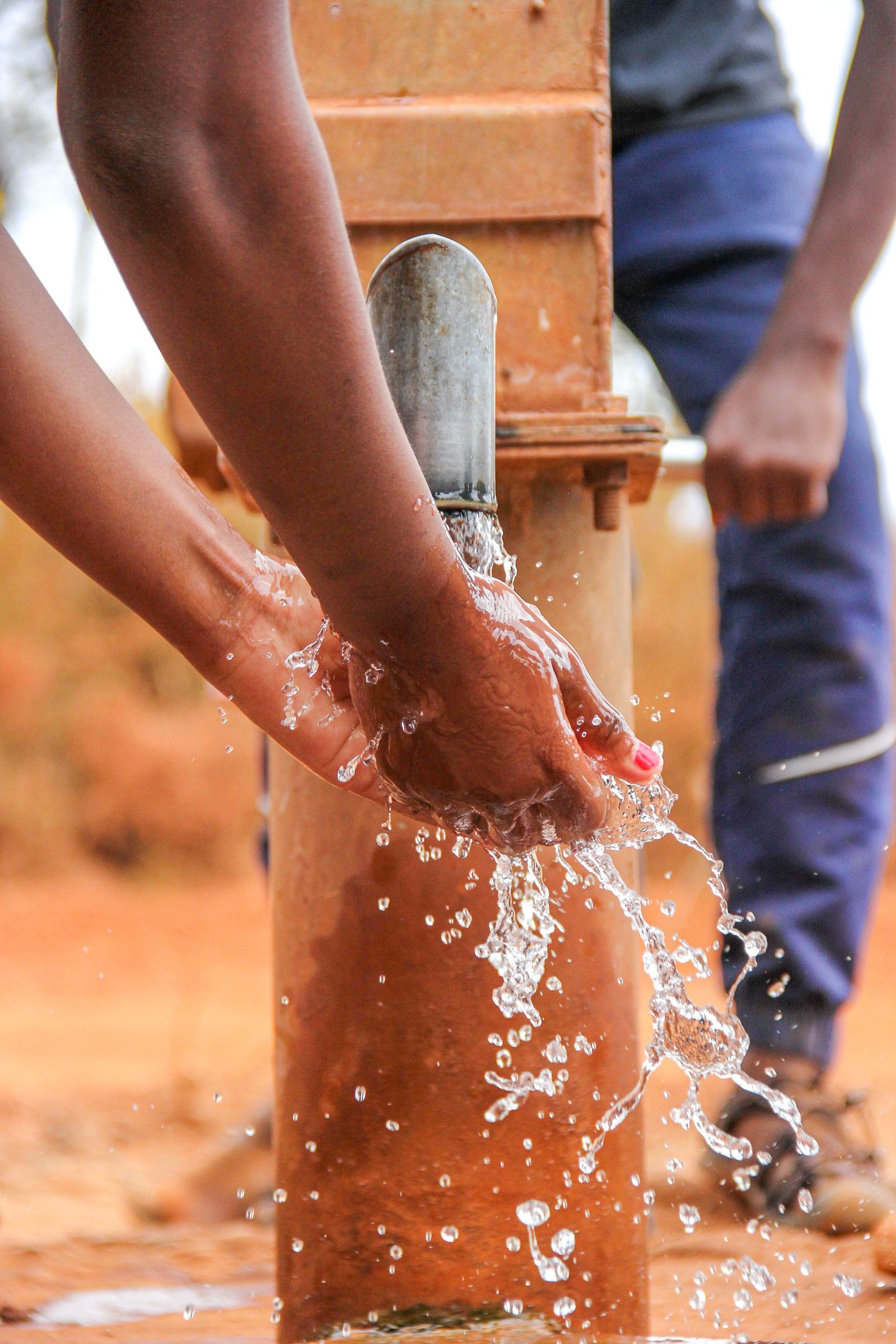
Water. NITI Aayog’s Composite Water Management Index reported in 2018 that nearly 600 million Indians faced high to extreme water stress and that demand for potable water would outstrip supply by 2030. Households, farms, factories and cities already pay for workarounds: tankers, purifiers, borewells, treatment plants. Measurement, reuse, leak detection and agricultural efficiency are the slices a company can own.
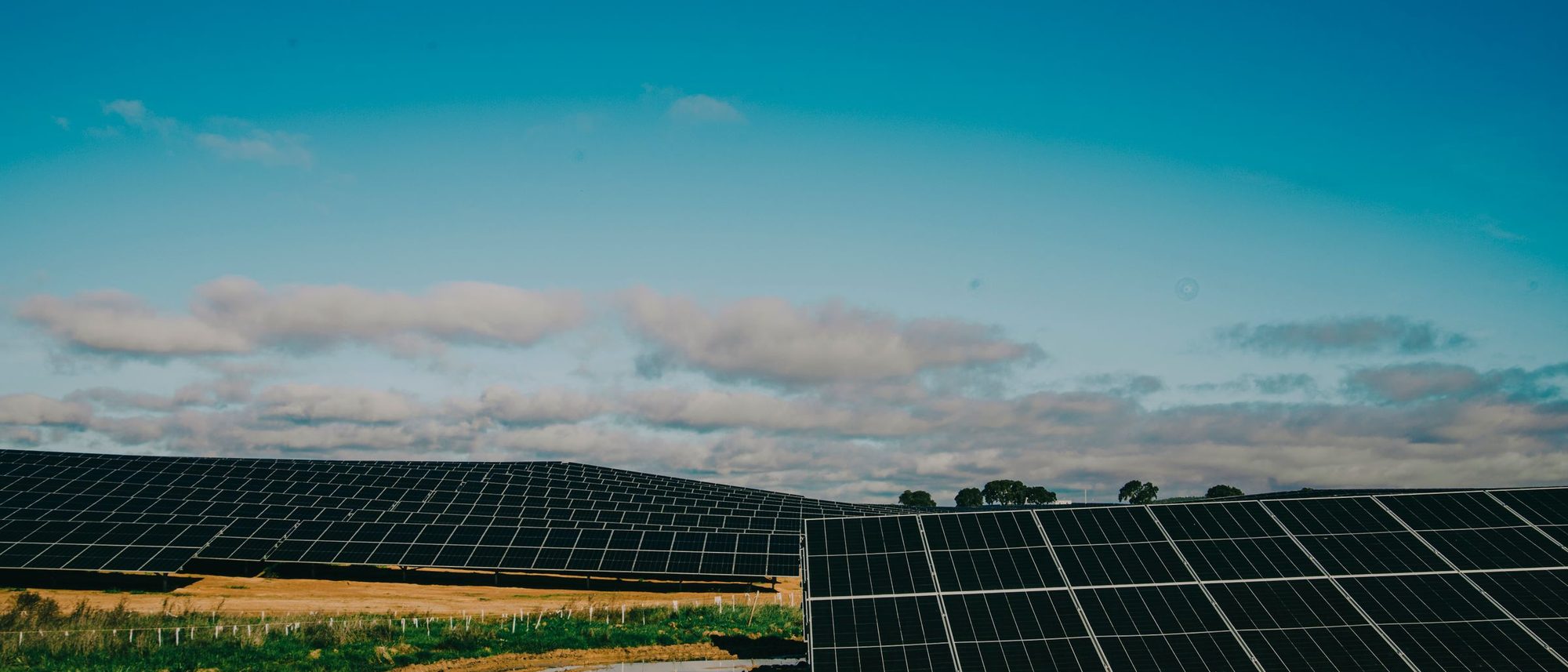
Energy. The government reported that as of 30 June 2025 India had 242.78 GW of non-fossil capacity out of 484.82 GW installed, about half, with a target of 500 GW of non-fossil capacity by 2030. A grid that is half solar and wind needs storage, forecasting, flexible demand, rooftop installation and finance for small buyers, and every factory and building with a power bill becomes a buyer of some of it.
Logistics. A study by NCAER for DPIIT put India’s logistics cost at 7.8 to 8.9 per cent of GDP in 2021–22. The companies sit in freight matching, warehousing near consumption, cold chains, rail and coastal modal shift, and the software that makes a small transporter efficient.
Money: credit for small firms
SIDBI’s 2025 study of the MSME sector estimated an addressable credit gap of about 24 per cent, or ₹30 lakh crore, and higher still for services firms at 27 per cent and for women-owned firms at 35 per cent. The gap persists because lenders cannot see small firms well enough to price their risk. The [India Stack lesson](/library/india-stack-as-market-map) covers the rails that change this: GST returns, UPI flows and Account Aggregator consent make a small firm’s cash visible. The companies are in underwriting, invoice finance, supply-chain credit and the software that produces the data a lender needs.
A structural problem already has a number in a government survey. The company is the smallest group that pays to move it.
From a statistic to a company
A public number is where the search starts, not where the company is. The step from one to the other has three parts. Find who pays today. Every structural problem has paid workarounds: the tanker, the moneylender, the relative who looks after a parent, the diesel generator. The workaround is proof that money is already moving and shows the price ceiling. Find the slice you can reach. Not the problem: the group of buyers you can call, who share a budget and a channel. Find the wedge. The smallest version of the slice that would pay you this year, which is the subject of the [wedge lesson](/library/wedge-small-enough-to-win).
Proximity decides which problems belong on your list. A founder who has run a warehouse sees logistics differently from one who has read about it, and a founder who has arranged care for a parent from another city knows the ageing market as a buyer. The checklist asks you to keep only two or three problems for that reason. The [founder-market fit lesson](/library/founder-market-fit-unfair-advantage-test) covers how to test the advantage proximity gives.
An invented example of the three steps. A founder in Pune has spent three years arranging care for a parent from Bengaluru. The public number is the ageing share. Who pays today: children working in other cities, who pay for help at home, drivers for hospital visits and a neighbour’s goodwill, and who have no reliable way to know whether any of it happened. The slice: salaried children in the six largest metros with a parent in a smaller city. The wedge: a monthly service that coordinates and verifies the visits a parent already has, sold to the child, in one city pair, at a price below what the child now spends on the workarounds. That is a company of a few hundred customers in its first year, standing on a number projected to rise until 2050.
Two warnings apply to every problem on the list. First, a large public number attracts capital and competitors; the wedge has to be specific enough that the founder can win it against both. Second, structural problems are often slow to pay, because the buyer has managed the problem with a workaround for years. Price against the workaround and expect the sales cycle of a habit change, not of a purchase.
Building the list, and keeping it current
Work through the checklist in one sitting. Keep the problems you are close to, write the public number and its latest value for each, name who pays today and for what, and name three people who live the problem. Call one of them within a month. Then write the wedge in a sentence.
Set one date a year to update every number on the list: the Periodic Labour Force Survey, the power ministry’s capacity figures and the sector reports from SIDBI and NITI Aayog are published on schedules, and a number that has moved is a reason to look again. A problem whose number is getting worse is a market growing. A problem whose number is improving fast is one where someone else has found the wedge, and the question is whether there is room for another.
Figures were checked in October 2026 against the sources below and are the latest published values found on that date. Nothing here is investment advice.
Sources
- Down To Earth, India will be greyer by 2050 (India Ageing Report 2023, IIPS and UNFPA), 27 September 2023
- Ministry of Statistics and Programme Implementation, Press note, Periodic Labour Force Survey Annual Report July 2023–June 2024, September 2024
- NITI Aayog, Composite Water Management Index, June 2018, via India Environment Portal
- Down To Earth, India reaches 50% non-fossil fuel power capacity five years ahead of target, 15 July 2025 (capacity at 30 June 2025)
- Business Standard, India’s logistics cost between 7.8 and 8.9% of GDP in FY22: NCAER, 14 December 2023
- SIDBI, Understanding the Indian MSME Sector: Progress and Challenges, May 2025, via CXOToday